

Blog
Blog
Sciatica and Lower Back Pain: What's Driving It and Regenerative Options to Consider

Few experiences are as disruptive as a sharp, shooting pain that runs from your lower back down through your hip and leg. For many people in Utica and Syracuse, that pain has a name — sciatica — but the underlying story is often less clear than the label suggests. Sciatica isn't really a diagnosis on its own; it's a symptom that points to something irritating one of the largest nerves in the body. Understanding what's actually driving it is the first step toward finding meaningful relief.
At Revive Health, lower back pain and sciatica-related symptoms are frequently evaluated as part of a broader regenerative care plan. Here's a closer look at what causes them, why they can be so stubborn, and what non-surgical options exist when conservative care plateaus.
What's Actually Happening With Sciatica?
The sciatic nerve is the largest nerve in the body, running from your lower back, through the buttock, and down each leg. When something irritates or compresses this nerve along its path, the result is the classic pattern of pain, tingling, or numbness that follows the nerve down the leg. The irritation can come from a variety of sources, including disc problems, joint inflammation, muscle compression in the buttock (such as the piriformis), or chronic inflammation in the surrounding tissue.
Because sciatica is a symptom rather than a single condition, what helps one person may not be appropriate for another. The right path begins with understanding what's actually driving the nerve irritation in your specific case.
Common Drivers of Lower Back and Sciatic Pain
Persistent lower back pain and sciatica-style symptoms often involve some combination of:
- Chronic inflammation in the soft tissue and joints of the lower back
- Muscle tightness and trigger points in the gluteal region
- Degenerative changes in the discs or facet joints
- Old injuries that never fully healed
- Repetitive strain from sitting, lifting, or postural habits
- Compensation patterns from issues in the hip, knee, or foot
Many of these share the same underlying drivers — reduced circulation, soft-tissue degeneration, and chronic inflammation — which is where regenerative care can play a role for appropriate candidates.
Why Symptoms Often Linger
Lower back and sciatic pain can drag on for months for several practical reasons. Some of the involved tissues have limited blood supply and heal slowly. The lower back also bears constant load throughout the day, which makes it difficult to truly rest. And conventional approaches that focus only on suppressing inflammation or numbing the area don't address the underlying soft-tissue issues that often drive ongoing symptoms.
That's why people frequently bounce between temporary relief and recurring flare-ups, often for years.
Non-Surgical Options to Consider
SoftWave Therapy
SoftWave Therapy uses FDA-cleared acoustic wave technology to stimulate circulation, activate stem cells, and support tissue repair. For appropriate cases of soft-tissue inflammation and muscular involvement around the lower back and hip, it may be evaluated as part of a broader regenerative approach. It is important to note that not all forms of back pain are appropriate for acoustic wave therapy, which is why a thorough evaluation is essential before treatment is considered.
If lower back or sciatica-style pain has been a constant companion despite your best efforts, it may be time to take a different look. Schedule a consultation to explore whether regenerative care fits your situation.
Red Light Therapy
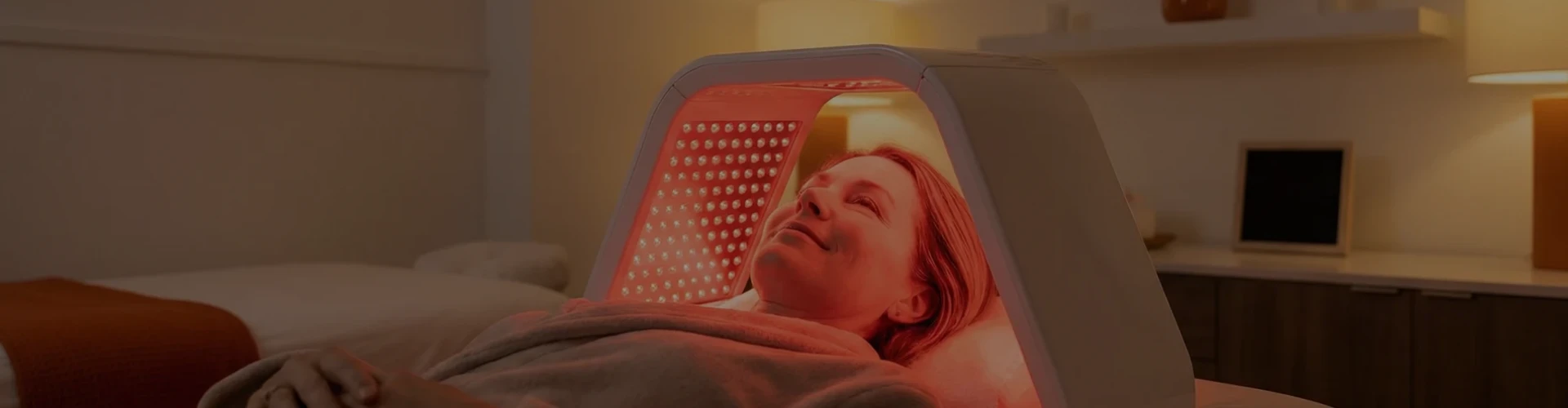
Red Light Therapy supports mitochondrial function and may help regulate the chronic inflammation that frequently accompanies long-standing back pain. Used alongside other regenerative treatments, it provides the cellular energy that repair requires.
Supporting Repair From the Inside
For appropriate patients, Peptide Therapy and IV Nutrition Therapy may be incorporated under medical guidance to support biological repair and supply the nutrients recovery requires. As with all regenerative care, the right plan is individualized after a thorough evaluation.
The Role of Movement and Lifestyle
For most patients, addressing lower back and sciatica-related pain isn't just about a single therapy. Posture, daily movement patterns, core strength, and how you spend time at work all play important roles. Your care team can help you understand which supportive habits will reinforce your treatment and which patterns may be working against it. This integrated philosophy is part of our Chronic Pain & Injury Recovery approach.
Frequently Asked Questions
Can SoftWave help with disc-related sciatica?
It depends on what's actually driving the pain. Acoustic wave therapy is more appropriate for certain forms of soft-tissue irritation and inflammation than for severe disc-related issues. A proper evaluation determines whether your case is a candidate or whether another approach makes more sense.
How do I know whether I really have sciatica?
Sciatica refers to a specific pattern of pain or sensation that follows the sciatic nerve down the leg. It's important to remember that this is a symptom rather than a diagnosis, so identifying the actual underlying cause matters more than the label itself. A thorough evaluation helps clarify that.
Do I need imaging before treatment?
Sometimes. Imaging may be appropriate in certain situations to help understand what's driving symptoms. Your care team can help you understand whether it's necessary in your specific case.
When to Consider More Aggressive Intervention
Severe nerve compression, progressive neurological symptoms, or other serious findings may require additional evaluation beyond regenerative care. A responsible assessment will tell you honestly if non-surgical options are appropriate or if a different path is the safer choice. Honest evaluation is central to responsible regenerative medicine.
Even a single thorough evaluation can clarify whether your symptoms point toward an issue that may respond to regenerative care or one that's better served by a different approach. That clarity alone often makes the next step easier to take, even before any treatment begins.
Back and Sciatica Care in Utica and Syracuse
Revive Health serves patients throughout Central New York from our Utica and Syracuse locations. If lower back pain or sciatica-style symptoms have been shaping your days, an evaluation is a straightforward way to understand what's actually going on and what realistic options exist for your situation.
Schedule Your Consultation or contact our team to learn more about whether regenerative care is right for you.
‹ Back
Recent Posts
-

-

-

-

Building Resilience for Fall: Wellness IVs and Whole-Body Recovery
September 23, 2026
-

Tech Neck and Desk Pain: Relief for the Return to Work and School
September 16, 2026