

Blog
Blog
Tendonitis That Won't Heal: How Acoustic Wave Therapy Stimulates Repair
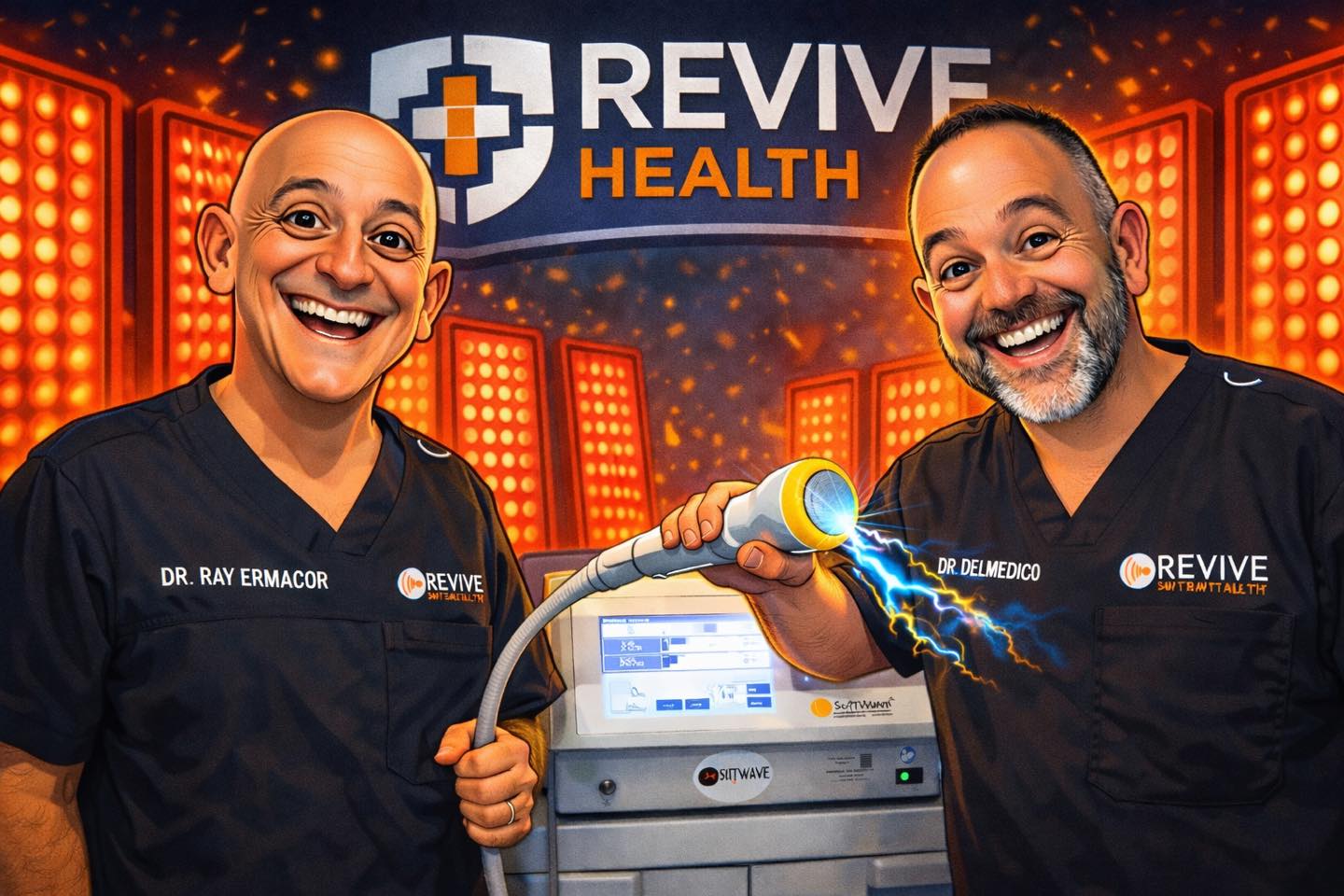
Tendon injuries have a reputation for being slow to heal — and for very good reason. Whether it's tennis elbow, Achilles tendonitis, jumper's knee, or chronic shoulder irritation, many people in Utica and Syracuse find that the pain lingers for months despite rest, ice, bracing, and time off. Just when they think it's finally gone, it flares again with the first return to activity. Understanding why tendons are so stubborn is the first step toward finding an approach that actually works.
At Revive Health, tendonitis and tendinopathy are among the most common conditions evaluated for non-surgical regenerative care. Here's what's really happening in a tendon that won't heal — and how acoustic wave therapy is designed to break the cycle.
Tendonitis vs. Tendinopathy
The two terms are often used interchangeably, but they describe meaningfully different things. Tendonitis refers to acute inflammation of a tendon — the classic, freshly irritated injury. Tendinopathy refers to chronic degeneration of the tendon tissue itself — the structural breakdown that develops when an injury never fully resolves and the tendon is repeatedly re-stressed.
This distinction matters because many "stubborn" cases that have lasted for months are actually tendinopathy, not simple inflammation. That's precisely why anti-inflammatory approaches alone so often fall short: they target inflammation when the real problem is degenerated tissue that needs to be rebuilt.
Why Tendons Heal So Slowly
Tendons have a limited blood supply compared to muscle. Because circulation is what delivers the oxygen and nutrients needed for repair, poor blood flow translates directly into slow, incomplete healing. The tendon tries to repair, but it can't quite finish the job before the next bout of stress sets it back. Common contributors to this cycle include:
- Repetitive strain from work, sports, or hobbies
- Overuse without adequate recovery time
- Age-related changes in tissue quality and elasticity
- Previous injuries that never healed completely
- Sudden increases in training intensity or volume
The result is a frustrating loop of irritation, partial healing, and re-injury that can persist for a very long time without the right intervention.
How Acoustic Wave Therapy Stimulates Repair
SoftWave Therapy uses FDA-cleared unfocused acoustic waves to directly target the problem that makes tendons heal slowly. By delivering acoustic energy into the affected tissue, it is designed to:
- Improve microcirculation and blood flow to the area
- Activate stem cells where repair is needed
- Stimulate collagen production and tissue remodeling
- Reduce inflammatory stress
In other words, acoustic wave therapy is designed to stimulate remodeling within damaged tendon tissue — potentially improving its structural integrity over time rather than simply quieting the pain for a few weeks. It addresses the circulation problem at the heart of why tendons struggle to heal.
Common conditions evaluated include tennis and golfer's elbow, Achilles tendonitis, patellar tendonitis, and rotator cuff tendinopathy. If a tendon problem has outlasted months of rest and conventional care, it may be time for a fundamentally different approach — schedule a consultation to learn whether SoftWave is right for you.
Supporting the Healing Environment
Stimulating repair is most effective when the body has everything it needs to follow through. At Revive Health, SoftWave is often combined with complementary therapies:
- Red Light Therapy to support cellular energy production for tissue repair
- Peptide Therapy to reinforce biological repair signaling under medical supervision
- IV Nutrition Therapy to supply the nutrients that support recovery
This integrated strategy is part of our broader Chronic Pain & Injury Recovery approach, and active adults can also explore it through our Performance & Recovery model.
What to Expect
SoftWave sessions are performed in-office, require no anesthesia, and typically involve no downtime. Most patients undergo a structured series of treatments rather than a single session, since tissue remodeling is a progressive process. The total number of sessions depends on the severity, location, and duration of the condition, and your care team will outline a realistic plan based on your evaluation.
Why Early Evaluation Helps
While SoftWave can be evaluated even for long-standing tendon problems, addressing a stubborn tendon sooner rather than later often makes the recovery process more straightforward. The longer a tendon stays trapped in the cycle of partial healing and re-injury, the more degeneration can accumulate. If you've been waiting and hoping a tendon issue would resolve on its own, an evaluation can clarify your options.
Frequently Asked Questions
Why hasn't my tendon healed on its own?
Tendons have a limited blood supply, so they receive less of the oxygen and nutrients healing requires. Combined with repeated stress, this often traps the tendon in a cycle of partial healing and re-injury. Acoustic wave therapy is designed specifically to address that circulation problem.
Is it too late if I've had the problem for over a year?
Not necessarily. SoftWave can be evaluated even for long-standing tendon conditions. That said, addressing a stubborn tendon sooner often makes recovery more straightforward, since less degeneration has had time to accumulate. An evaluation can clarify your options.
How many treatments will I need?
Most patients undergo a structured series of sessions, with the total depending on the location, severity, and duration of the condition. Your care team will outline a realistic plan after assessing your tendon.
Tendon Pain Relief in Utica and Syracuse
Revive Health provides FDA-cleared SoftWave Therapy at both our Utica and Syracuse locations, serving patients throughout Central New York. If a tendon injury simply won't heal despite your best efforts, regenerative care may offer a genuine way forward.
Tendon problems rarely improve by simply waiting them out, especially once they've become chronic. If rest, bracing, and time off haven't resolved a tendon issue after months, that's usually a sign the tissue needs more than continued rest to break the cycle of partial healing and re-injury. An evaluation can help you understand whether acoustic wave therapy is a realistic next step for your specific tendon.
Schedule Your Consultation or contact our team to learn more about whether acoustic wave therapy is right for your situation.
‹ Back
Recent Posts
-

-

-

-

Building Resilience for Fall: Wellness IVs and Whole-Body Recovery
September 23, 2026
-

Tech Neck and Desk Pain: Relief for the Return to Work and School
September 16, 2026