

Blog
Blog
Tennis & Golfer's Elbow: Why Summer Sports Flare Them and How Regenerative Care Helps
Summer in Central New York means tennis courts, golf rounds, pickleball, and weekend yard projects, and for a lot of people, it also means a nagging ache on the inside or outside of the elbow that just won't settle down. Tennis elbow and golfer's elbow are two of the most common overuse injuries we hear about once the weather warms up and everyone gets moving again.
Despite their names, you don't have to play either sport to develop them. For many patients in Utica and Syracuse, these conditions show up after a burst of repetitive activity the arm wasn't quite conditioned for. At Revive Health, elbow tendon pain is one of the conditions evaluated for non-surgical regenerative care.
Tennis Elbow vs. Golfer's Elbow
Both conditions involve irritation of the tendons that attach forearm muscles to the elbow, but they affect different sides. Tennis elbow (lateral epicondylitis) affects the outer elbow and is linked to the tendons that extend the wrist and fingers. Golfer's elbow (medial epicondylitis) affects the inner elbow and involves the tendons that flex the wrist.
In both cases, the underlying problem is the same: small tendons taking on repetitive load until tiny areas of breakdown develop faster than the body can repair them. The result is pain with gripping, lifting, or twisting motions: opening a jar, shaking hands, or swinging a racket.
Why Summer Activity Flares Them Up
These injuries rarely come from a single dramatic moment. They build up, and warm-weather habits create the perfect conditions:
- Jumping into a full season of tennis, golf, or pickleball after months off
- Repetitive yard work, gardening, and home projects
- Gripping tools, rackets, or handles for long stretches
- Poor technique or ill-fitted equipment adding extra strain
- Skipping warm-ups and pushing through early twinges
Because the load is repetitive rather than traumatic, people often don't connect the pain to its cause until it's well established.
Why Elbow Tendon Pain Is So Stubborn
Tendons have a relatively limited blood supply, which means they heal slowly compared to muscle. Once a tendon enters a state of chronic irritation, simply resting often isn't enough, and going back to the same activity too soon tends to restart the cycle. That's why so many people bounce between feeling better and flaring up again for months.
An approach that actively supports circulation and tissue repair, rather than just waiting or masking the pain, tends to make a more meaningful difference for these stubborn tendon problems.
A Regenerative Approach to Elbow Pain
SoftWave Therapy
SoftWave Therapy uses FDA-cleared acoustic wave technology to stimulate circulation, activate stem cells, and support tissue repair in the affected area. For appropriate cases of tennis or golfer's elbow, it may be evaluated as part of a broader plan aimed at improving the tendon's repair environment rather than simply quieting the symptom.
If elbow pain has been getting in the way of your favorite summer activities, you don't have to just push through it. Schedule a consultation to learn whether regenerative care fits your situation.
Red Light Therapy
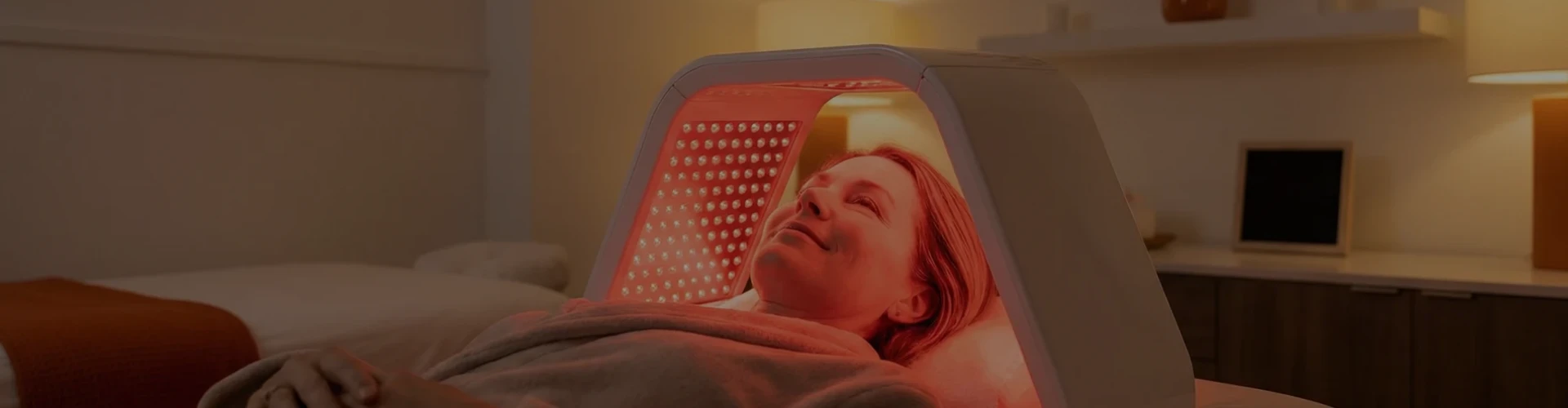
Red Light Therapy supports mitochondrial function and cellular energy, helping create the conditions repairing tissue needs to recover. Used alongside SoftWave, it complements deeper regenerative stimulation by supporting both the repair signal and the energy to act on it.
Supporting Recovery More Broadly
For appropriate patients, Peptide Therapy and IV Nutrition Therapy may be incorporated under medical guidance to reinforce repair signaling and supply the nutrients tissue needs. The right combination is always individualized after a thorough evaluation.
The Role of Activity and Technique
Tendon problems almost always benefit from smart activity modification alongside any treatment. That can mean adjusting technique, improving grip sizing, building forearm strength gradually, and warming up properly before play. Your care team can help you understand which adjustments matter most for your case so you can keep doing what you enjoy. This integrated thinking is part of our Chronic Pain & Injury Recovery approach.
Frequently Asked Questions
Do I have to stop playing entirely?
Not always. Complete rest is sometimes useful early on, but the bigger goal is changing the conditions that caused the problem (technique, load, and tissue repair) so you can return to activity without restarting the cycle. A proper evaluation helps define what's realistic for your case.
How is this different from just icing and bracing?
Ice and bracing can help manage symptoms, but they don't address the underlying state of the tendon. Regenerative approaches aim to support genuine repair so relief is less likely to be temporary.
How long does recovery usually take?
Tendon healing takes time, and timelines vary by person and severity. A realistic plan is built and adjusted over weeks, with progress monitored along the way.
When Other Intervention May Be Needed
Severe or long-standing cases that don't respond to conservative care may sometimes warrant additional evaluation. A responsible assessment will be honest about what is realistic for your specific elbow rather than promising a guaranteed fix.
What an Evaluation Involves
If you've never explored regenerative care before, it helps to know what an evaluation actually looks like. Rather than jumping straight to treatment, the process starts with understanding your history: how the pain began, what aggravates it, how it's affecting your activities, and what you've already tried. A hands-on assessment of the elbow, grip, and surrounding muscles helps clarify which tendons are involved and how irritated they are.
From there, the conversation is about what's realistic for your specific case: whether acoustic wave therapy is appropriate, what a plan might involve, and how progress would be tracked. There's no pressure to commit to anything. The goal is simply to give you a clear, honest picture of what's driving your pain and what your options are, so you can make an informed decision.
Elbow Pain Relief in Utica and Syracuse
Revive Health offers FDA-cleared SoftWave Therapy and integrated regenerative care at both our Utica and Syracuse locations, serving patients throughout Central New York. If elbow pain has been shadowing your summer, an evaluation is a low-pressure way to learn what's actually happening and what realistic options exist.
Schedule Your Consultation or contact our team to learn more about non-surgical options for tennis and golfer's elbow.
‹ Back
Recent Posts
-

-

-

-

Building Resilience for Fall: Wellness IVs and Whole-Body Recovery
September 23, 2026
-

Tech Neck and Desk Pain: Relief for the Return to Work and School
September 16, 2026